
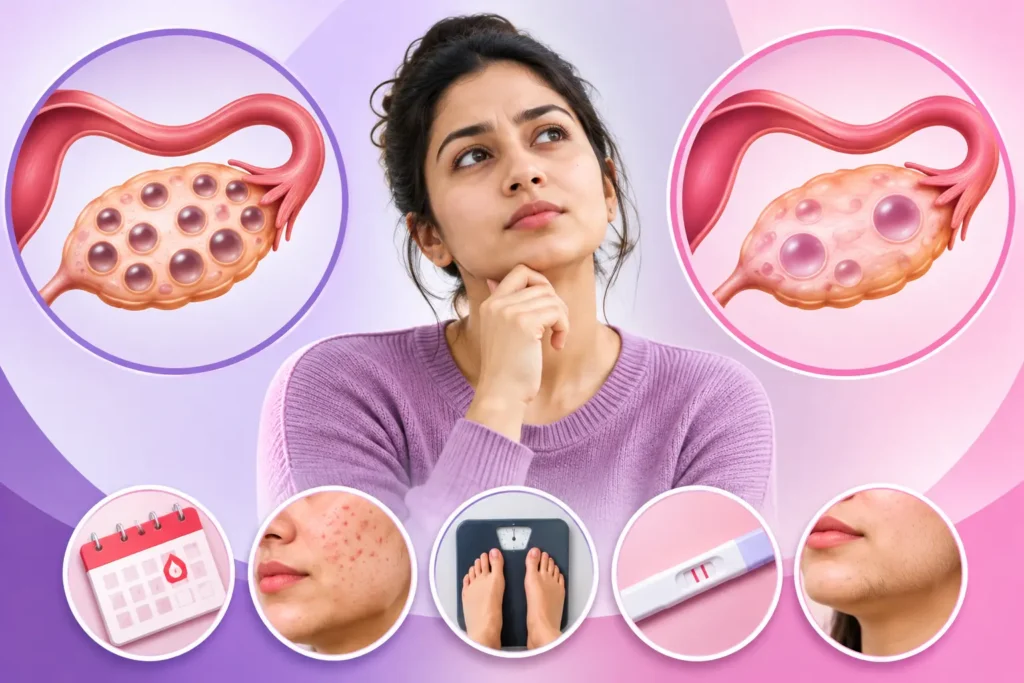
PCOS vs PCOD: Key Differences, Symptoms, Causes and Treatment Options
Irregular periods, persistent acne, unwanted facial hair or difficulty getting pregnant can raise questions about hormonal health. You may have heard the terms PCOS and PCOD, but are they different conditions? Is one more serious than the other?
The difference between PCOS and PCOD is mainly about medical terminology. PCOS is an established hormonal and metabolic condition, while PCOD is commonly used in India without separate internationally accepted diagnostic criteria.
Understanding the symptoms, causes, diagnosis and treatment options can help you identify when medical evaluation is necessary.
What Is the Difference Between PCOS and PCOD?
What Is PCOS?
Polycystic Ovary Syndrome (PCOS) is a condition that affects hormonal regulation, ovulation and metabolic health. Ovulation is the process in which an ovary releases an egg.
Women with PCOS may experience irregular menstrual cycles, increased androgen activity, acne, unwanted facial hair or difficulty conceiving.
In May 2026, international experts introduced the name Polyendocrine Metabolic Ovarian Syndrome (PMOS) to better reflect the condition’s effects beyond the ovaries. The clinical recommendations remain unchanged.
What Is PCOD?
PCOD stands for Polycystic Ovarian Disease. In India, this term is frequently used when discussing irregular menstrual cycles or polycystic ovarian changes seen on ultrasound.
However, international medical guidelines do not establish PCOD as a separate disease with its own diagnostic criteria. Therefore, claims that PCOD is always milder than PCOS can be misleading.
PCOS vs PCOD: Key Differences Explained
| Common question | Medical explanation |
| Are PCOS and PCOD different diseases? | They are not established as separate diagnoses in international guidelines. |
| Is PCOD less serious than PCOS? | Not necessarily. Severity depends on individual symptoms and health risks. |
| Do all women have ovarian cysts? | No. Polycystic ovarian appearance is not always present. |
| Can fertility be affected? | Yes. Irregular ovulation may make conception more difficult. |
| Does treatment differ? | Treatment depends on symptoms, metabolic health and pregnancy plans. |
Your medical findings matter more than whether PCOS or PCOD appears on your report.
Read More : Pregnancy Care Guide: Essential Checkups, Prenatal Care Appointments and Tests
What Are the Common Symptoms of PCOS and PCOD?
PCOS symptoms vary from person to person. Some women experience menstrual irregularities, while others notice changes in their skin, hair or weight.
Common symptoms include:
- Irregular or missed periods: Menstrual cycles may become unpredictable or occur less frequently.
- Persistent acne: Hormonal changes may contribute to oily skin and acne.
- Unwanted facial or body hair: Increased androgen activity can cause thicker hair growth.
- Scalp hair thinning: Hair may gradually become thinner, particularly around the crown.
- Weight changes: Some women experience weight gain, although PCOS also affects women who are not overweight.
- Difficulty conceiving: Irregular ovulation can make pregnancy planning challenging.
- Darkened skin patches: Velvety darkening around the neck or underarms may be associated with insulin resistance.
Having these symptoms does not automatically confirm PCOS. Thyroid disorders and other hormonal conditions may cause similar changes.
If your period is late and pregnancy is possible, consider taking a pregnancy test rather than assuming PCOS is responsible.
Missing periods for more than 90 days also warrants medical assessment, although normal menstrual patterns vary with age and time since the first period. Prolonged irregular ovulation can sometimes cause excessive thickening of the uterine lining.
What Causes PCOS or PCOD?
The exact PCOS causes are not fully understood. Genetics, hormonal regulation and metabolic factors appear to contribute to the condition.
Insulin Resistance and Hormonal Changes
Insulin helps the body’s cells use glucose for energy. When insulin resistance develops, cells respond less effectively, and the body may produce additional insulin.
Higher insulin levels can contribute to increased androgen production. Androgens, including testosterone, can influence ovulation, acne and unwanted hair growth.
However, not every woman with PCOS has insulin resistance.
Genetics and Lifestyle Factors
PCOS is more common among women with affected family members. Lifestyle habits may influence symptoms and metabolic health, but PCOS is not simply caused by unhealthy eating or excess weight.
The same factors are relevant when discussing PCOD causes because PCOD does not have a separately established disease mechanism.
How Is PCOS Diagnosed?
A PCOS diagnosis involves reviewing menstrual history, symptoms, examination findings and appropriate investigations.
In adults, diagnosis generally requires at least two of the following findings after excluding other possible causes:
- Irregular or absent ovulation.
- Clinical symptoms or blood-test evidence of excess androgen activity.
- Polycystic ovarian appearance on ultrasound, or appropriately interpreted Anti-Mullerian Hormone (AMH) testing.
Your gynecologist may recommend hormone tests to exclude conditions such as thyroid dysfunction or elevated prolactin. Blood glucose and cholesterol tests may also help evaluate metabolic health.
What If My Ultrasound Report Says Polycystic Ovaries?
An ultrasound showing multiple small ovarian follicles does not automatically confirm PCOS.
Your gynecologist will consider menstrual patterns, symptoms and relevant test results before making a diagnosis. If your periods are regular and you have no concerning symptoms, an ultrasound finding alone may not require treatment.
AMH alone cannot diagnose PCOS. In adults, it may be used instead of ultrasound to assess polycystic ovarian morphology when appropriate. Both tests are not routinely needed for this purpose.
Teenagers require different diagnostic criteria. Ultrasound and AMH are not recommended for diagnosing PCOS in adolescents because ovarian appearance and hormone levels can vary during normal development.
PCOS Treatment Options: What Actually Helps?
PCOS treatment depends on your symptoms, metabolic health and whether you are planning pregnancy. Although there is no established permanent cure, appropriate management can improve symptoms and reduce associated health risks.
Lifestyle Changes and Nutrition
Regular physical activity, balanced meals and adequate sleep support metabolic health.
Exercise may improve insulin sensitivity even without significant weight loss. There is no single diet proven to cure PCOS. A sustainable eating pattern containing vegetables, fruits, whole grains and suitable protein sources is generally more practical than restrictive diets.
Medicines for PCOS Symptoms
Depending on your medical needs, treatment may include:
- Combined hormonal contraceptive pills: May improve menstrual regularity, acne and unwanted hair growth when pregnancy is not being planned.
- Cyclical progestogens: May help protect the uterine lining when periods occur infrequently.
- Metformin: May be considered for selected metabolic concerns.
- Other treatments: May help manage persistent acne, excess hair growth or scalp hair thinning.
Medication choices require clinical evaluation because some treatments are unsuitable during pregnancy.
Why Long-Term Monitoring Matters
PCOS is associated with increased risks of type 2 diabetes, high blood pressure and abnormal cholesterol levels. Some women also experience anxiety, low mood or distress related to their symptoms.
Regular follow-up helps address menstrual health, metabolic risks and emotional well-being.
Can You Get Pregnant With PCOS or PCOD?
Yes. Many women with PCOS conceive naturally, although irregular ovulation may make conception less predictable.
If you are planning pregnancy, your gynecologist may assess ovulation patterns, metabolic health and other fertility factors, including your partner’s fertility.
When clinically appropriate, medicines such as letrozole may be recommended to stimulate ovulation. IVF is not necessary for every woman with PCOS.
Fertility evaluation is generally recommended after 12 months of trying if you are under 35, or after six months if you are 35 or older. However, very irregular or absent periods may justify earlier assessment.
PCOS can also increase the risk of gestational diabetes and certain pregnancy complications, making preconception assessment and prenatal monitoring important.
Read More : Pregnancy Care Guide: Essential Checkups, Prenatal Care Appointments and Tests
When Should You Consult a Gynecologist?
Consider a gynecological evaluation if your periods remain absent for several months, your cycles become consistently irregular, or you develop persistent acne, increasing facial hair or unexplained scalp hair thinning.
Consultation is also appropriate if you experience fertility difficulties or are planning pregnancy with known PCOS.
For menstrual irregularities, PCOS-related symptoms or fertility concerns, patients seeking a gynecologist doctor in Patna can find Dr. Swati Jha’s consultation information on the clinic website.
Frequently Asked Questions About PCOS and PCOD
1. Is PCOS more serious than PCOD?
PCOD is not an established separate diagnosis. Health risks depend on individual symptoms, hormonal findings and metabolic health rather than the terminology used.
2. Can PCOS occur in women who are not overweight?
Yes. PCOS affects women across different body weights. Being slim does not rule out hormonal or metabolic concerns.
3. Can PCOS cause irregular or missed periods?
Yes. PCOS can interfere with ovulation, causing delayed, infrequent or absent periods. Persistent changes should be evaluated.
4. Can I get pregnant naturally with PCOS?
Yes. Natural conception is possible. Some women may need ovulation assessment or fertility treatment depending on their circumstances.
5. Does an ultrasound showing polycystic ovaries confirm PCOS?
No. Ultrasound findings alone are insufficient. Diagnosis requires evaluation of menstrual patterns, androgen activity and other possible causes.
6. Can diet and exercise permanently cure PCOS?
There is no established permanent cure. However, healthy habits and appropriate medical treatment can help manage symptoms and improve long-term health.
Conclusion
Understanding the difference between PCOS and PCOD helps avoid confusion, but your symptoms, diagnosis and overall health matter more than the terminology.
An accurate assessment and individualized treatment plan can help manage menstrual symptoms, address fertility concerns and support long-term health.
This article provides general medical information and does not replace individualized diagnosis or treatment.